



Catch Me If You Can: Story Breakdown, Deception Psychology & YouTube Recap Secrets (2026 Edition)
Why Movie Recaps Are Exploding in 2026 🎬🤖
Table of Contents
In 2026, attention is the most expensive currency on the internet.
People don’t always want to watch a two-hour movie.
They want to understand it, feel it, and talk about it — fast.
That’s exactly why movie recap videos are dominating YouTube, Shorts, Discover feeds, and even AI-powered search results.
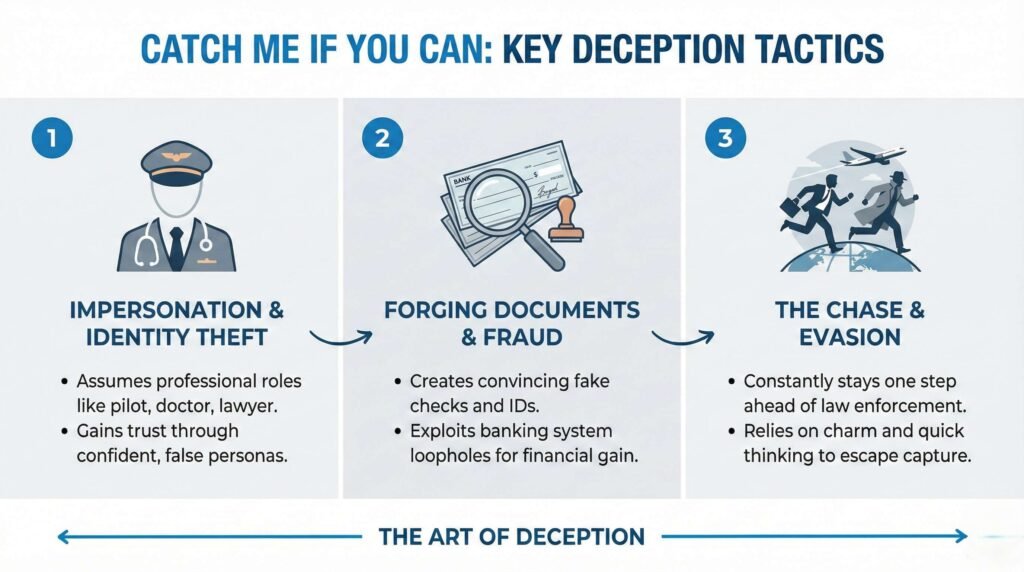
One film that continues to thrive in this recap economy is “Catch Me If You Can” — not because of its age, but because of its layers: deception, psychology, identity, authority, and redemption.
This guide does three things at once:
- Breaks down the story and psychology of Catch Me If You Can (without copyright risk)
- Reveals how recap creators work in 2026
- Shows how AI tools like Tool2mate help creators script, summarize, and narrate legally
This is not a movie summary.
This is a creator’s blueprint.
Catch Me If You Can — A Timeless Concept, Not Just a Movie
At its core, Catch Me If You Can is not about crime.
It’s about:
- Identity fraud
- Authority illusion
- Human trust
- Emotional survival
The story follows a teenage prodigy who discovers something terrifyingly simple:
If you look confident enough, people stop asking questions.
That single truth still runs the internet in 2026.
Frank Abagnale Jr.: The Psychology Behind the Hustle
Frank Abagnale Jr. didn’t begin as a criminal mastermind.
He began as a kid watching adults fail.
Broken Structure Creates Opportunists
- A collapsing family
- Financial instability
- Authority figures who didn’t listen
- A world where appearances mattered more than truth
Frank didn’t want to steal.
He wanted:
- Stability
- Respect
- Control
So he learned the fastest route: impersonation.
The Airline Illusion: Why the Pan Am Persona Worked
Frank’s most famous role was pretending to be a commercial airline pilot.
Why did it work?
Because society treats uniforms as truth.
Authority Bias in Action
- Pilot uniform = instant trust
- Airport systems assumed legitimacy
- No one wanted to challenge “the professional”
This psychological loophole is still abused today — just digitally:
- Fake SaaS founders
- AI-generated experts
- Deepfake authority figures
That’s why this story resonates more in 2026 than ever before.
FBI Chase: Strategy vs Instinct
The FBI agent chasing Frank isn’t portrayed as stupid.
He’s methodical.
Patient.
Rule-bound.
Frank is:
- Adaptive
- Emotional
- Improvisational
This clash creates the perfect cat-and-mouse narrative — the same formula that works for viral YouTube storytelling.
Why Recap Creators Love This Dynamic
- Constant tension
- Clear antagonist/protagonist
- Escalation in every act
- No boring middle
Identity Hopping: Doctor, Lawyer, Nobody
Frank’s ability to switch roles wasn’t about intelligence alone.
It was about pattern recognition.
He learned:
- How doctors talk
- How lawyers posture
- How systems expect people to behave
And then he mirrored it.
Lesson for Creators (2026 Insight)
Great recap videos do the same thing:
They don’t explain everything
They explain what the audience expects to hear next
The Turning Point: Capture, Consequences & Redemption
Every viral story needs a reversal.
Frank eventually gets caught.
But the real twist isn’t prison.
It’s what happens after.
From Criminal to Consultant
Instead of rejecting his skills, the system:
- Absorbs him
- Reprograms him
- Uses his insight to stop others
This is the most powerful theme for recap creators:
The same skills that break systems can also protect them.
Why This Story Is Perfect for YouTube Recap Culture
In 2026, recap videos succeed when they deliver:
- High emotional density
- Clear narrative arcs
- Ethical distance from copyrighted footage
Catch Me If You Can checks every box.
What Exactly Is a Movie Recap Video? (2026 Definition)
A modern recap video is not piracy.
It is:
- Commentary
- Analysis
- Story reconstruction
- Educational storytelling
Done correctly, it falls under transformative content.
Common Challenges Recap Creators Face
1. Copyright Flags
Using raw clips or dialogue = risk.
2. Flat Narration
Robotic scripts kill watch time.
3. Poor Structure
Most creators summarize instead of storytelling.
4. Burnout
Writing long scripts repeatedly is exhausting.
Where AI Tools Enter the Picture (Safely)
This is where Tool2mate-style workflows shine.
AI is not replacing creators.
It’s removing friction.
What AI Helps With:
- Structuring narratives
- Paraphrasing scenes
- Avoiding copyrighted dialogue
- Maintaining pacing
- Generating voice-friendly scripts
Synopsis vs Review Recap Videos (Know the Difference)
| Format | Purpose | Length | Best For |
|---|---|---|---|
| Synopsis | Story overview | Short-medium | Casual viewers |
| Review Recap | Analysis + opinion | Medium-long | Engaged audiences |
| Hybrid (2026 trend) | Story + insight | Long | Algorithm growth |
Most successful creators now use hybrid formats.
How to Write a Legal Movie Synopsis in 2026
Step-by-Step Framework
- Describe actions, not dialogue
- Avoid scene-by-scene copying
- Focus on motivations
- Compress time logically
- Add insight, not transcripts
AI helps here — but direction matters.
Writing Review-Style Recap Scripts That Retain Viewers
A high-retention recap script includes:
- A hook in first 10 seconds
- Pattern interrupts every 30–45 seconds
- Emotional framing
- A final reflective takeaway
This turns watchers into subscribers.
Turning Scripts Into Human-Sounding Voiceovers
In 2026, narration quality decides success.
Best Practices:
- Use conversational pacing
- Vary sentence length
- Add rhetorical questions
- Leave breathing space
AI voices only work when the script sounds human first.
Predictive Insight: Where Recap Content Is Headed (2026–2028)
Here’s what most blogs won’t tell you:
🔮 Prediction:
By 2028, recap creators who don’t add analysis will vanish from discovery feeds.
Why?
Because AI summaries are everywhere.
Humans will win by:
- Interpretation
- Emotional framing
- Contextual insight
That’s where creators — and tools like Tool2mate — stay relevant.
Actionable Takeaways for Creators
- Never summarize dialogue — summarize decisions
- Add one original insight per scene
- Use AI as a co-writer, not a copier
- Structure beats before writing words
- Optimize for humans first, algorithms second
FAQs
1. Is it legal to make movie recap videos on YouTube?
Yes, if the content is transformative, analytical, and avoids copyrighted clips.
2. Can AI help write recap scripts safely?
Yes — when guided correctly and used for paraphrasing and structure.
3. Why is Catch Me If You Can popular for recaps?
Because it combines deception, emotion, and redemption in a tight narrative arc.
4. What’s better: synopsis or review recaps?
Hybrid formats perform best in 2026.
5. How long should a recap video be?
8–15 minutes for monetization sweet spot.
6. Do recap channels still grow in 2026?
Yes — but only with insight, not summaries.
7. What makes a recap voiceover sound human?
Natural pacing, varied sentence length, and emotional cues.
Final Thoughts: Stories Outlive Technology
Catch Me If You Can isn’t famous because of scams.
It’s famous because it shows how identity, trust, and intelligence collide.
And in the AI-driven creator economy of 2026, that lesson matters more than ever.
If you’re building recap content, tools matter —
But storytelling mastery matters more.
💬 Join the Conversation
What movie should be decoded next?
Share this breakdown, and subscribe to Tool2mate insights.
#MovieRecap #YouTubeCreators #AITools #ContentCreation #FilmAnalysis #Tool2mate

